Tactics: Multi-touch and Single-touch
Last updated: October 13, 2026
What this is
Every Audyence campaign uses one of two tactics: Single-touch or Multi-touch. The tactic decides how much interest a prospect must show before they count as a lead. It's one of the biggest levers you have over lead quality, volume, and cost.
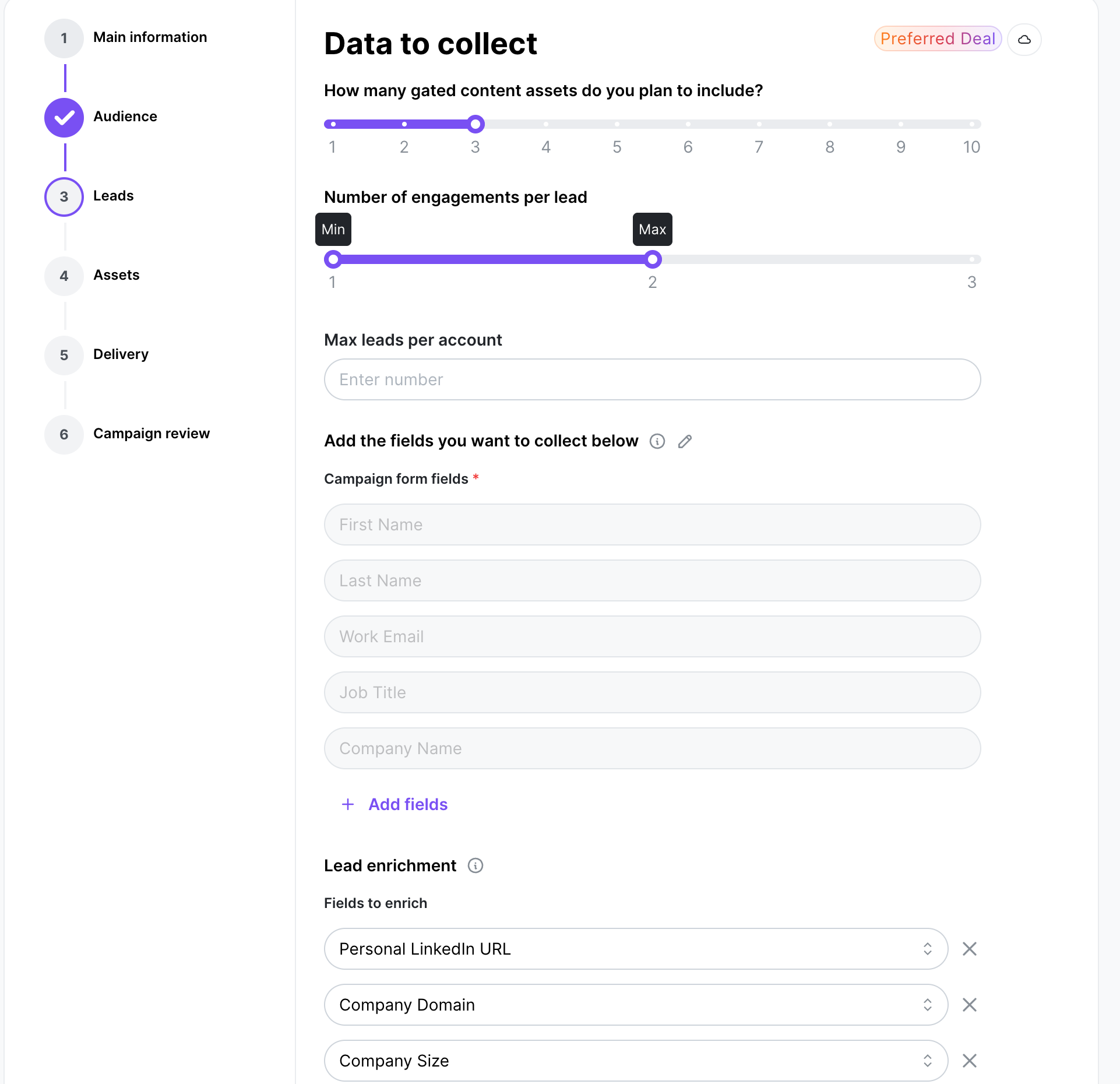
You set the tactic on the Leads: Data to Collect step of campaign setup, with two settings that work together: the number of gated content assets, and the engagements-per-lead range. This article helps you choose.
Key takeaway: Single-touch (1 engagement) gives you more leads at a lower cost per lead. Multi-touch (2 or more engagements with different content) gives you fewer, higher-intent leads at a higher cost per lead. Audyence prices per engagement, so cost grows with the number of engagements you require.
The core idea: an engagement is a touch
A touch is an engagement: one time a prospect engages with a piece of your gated content (downloading a whitepaper, watching a webinar, opening a guide). The number of engagements required per lead is what separates the two tactics:
Single-touch: a prospect counts as a lead after one engagement.
Multi-touch: a prospect must engage two or more times, with different pieces of your content, before they count as a lead.
Important: Audyence prices per engagement (CPE), not per lead. An engagement is one time a lead engages with a piece of your gated content. A single-touch lead (one engagement) costs about one CPE. A multi-touch lead that needs three engagements costs about three times the CPE.
Single-touch: reach and volume
A single-touch campaign delivers a lead as soon as a prospect engages with one content offer.
Best for:
Top-of-funnel reach and awareness: getting your content in front of as many qualified people as possible.
Volume goals: when you need many leads and can qualify or nurture them yourself afterward.
Lower cost per lead: one engagement per lead is the cheapest way to buy.
Faster delivery: with fewer engagements required, more of your audience qualifies, so leads build up faster.
Note: The trade-off: one engagement is a lighter signal of intent. Some single-touch leads will be early-stage or only casually interested, so plan a qualification or nurture step on your side.
Multi-touch: quality and intent
A multi-touch campaign delivers a lead only after the prospect has engaged with your content more than once.
Best for:
Higher-intent leads: someone who engages two or three times has shown repeated, deliberate interest, which is a stronger buying signal.
Deeper qualification: several engagements separate casual browsers from real prospects before a lead reaches your team.
Content-led nurture: guide a prospect through a series of assets (an overview, then a case study, then a buyer's guide) so leads arrive better informed.
Sales efficiency: fewer, better leads mean your sales team spends time on prospects more likely to convert.
Note: The trade-off: multi-touch leads cost more per lead (more engagements at your CPE), and there are fewer of them, because a smaller share of your audience completes every required engagement. Expect lower volume for higher quality.
At a glance
Single-touch | Multi-touch | |
|---|---|---|
Engagements required per lead | 1 | 2 or more |
Intent signal | Lighter | Stronger |
Typical lead volume | Higher | Lower |
Cost per lead | Lower | Higher (grows with engagements) |
Best for | Reach, awareness, volume | Qualification, nurture, sales-ready leads |
Content needed | One offer is enough | Several assets (a lead can only engage with the content you provide) |
How to choose
Match the tactic to your funnel stage. Use single-touch to build a wide top of funnel. Use multi-touch when you want fewer, more qualified leads closer to a buying decision.
Weigh volume, quality, and budget. A fixed budget buys many single-touch leads or fewer multi-touch leads. Decide which your goal needs more before you set the engagements range.
Make sure you have the content. Multi-touch only works if you supply enough different assets for a prospect to engage with. A lead can't have more engagements than there's content to engage with. If you have one strong offer, single-touch is the natural fit.
Important: Watch the deliverability score. Requiring more engagements per lead makes each lead harder to produce, which can lower your campaign's deliverability score. If the score drops, easing the engagements requirement is one of the fastest ways to recover volume.
Tip: You can run both. Many advertisers run single-touch campaigns for reach and multi-touch campaigns for qualified pipeline, instead of making one choice for all their spend.
Tips
Start with single-touch when you're entering a new audience or testing an offer. Move to multi-touch once you know the content converts and you want higher lead quality.
If sales says leads are "too early," raising the required engagements is a direct way to tighten quality.
If volume is below goal, lowering the required engagements (toward single-touch) usually recovers it faster than any other single change.
Order your multi-touch content on purpose: an awareness piece first, then a deeper, decision-stage asset, so each engagement moves the prospect forward.